Titanium Products | Radiating into Space! New Material Achieves Passive Cooling
-
Release Time:2026.06.26
Global warming has brought scorching heat year after year. It's not just carbon-based lifeforms that struggle to endure the blistering temperatures—various types of industrial equipment have also ground to a halt in defeat: at this very moment in 2026, power transformers on India's grid require manual water spraying and fans to cool down, British railways are experiencing delays or suspensions due to high temperatures, and French nuclear reactors are being forced to reduce output because cooling has become difficult under the extreme heat.
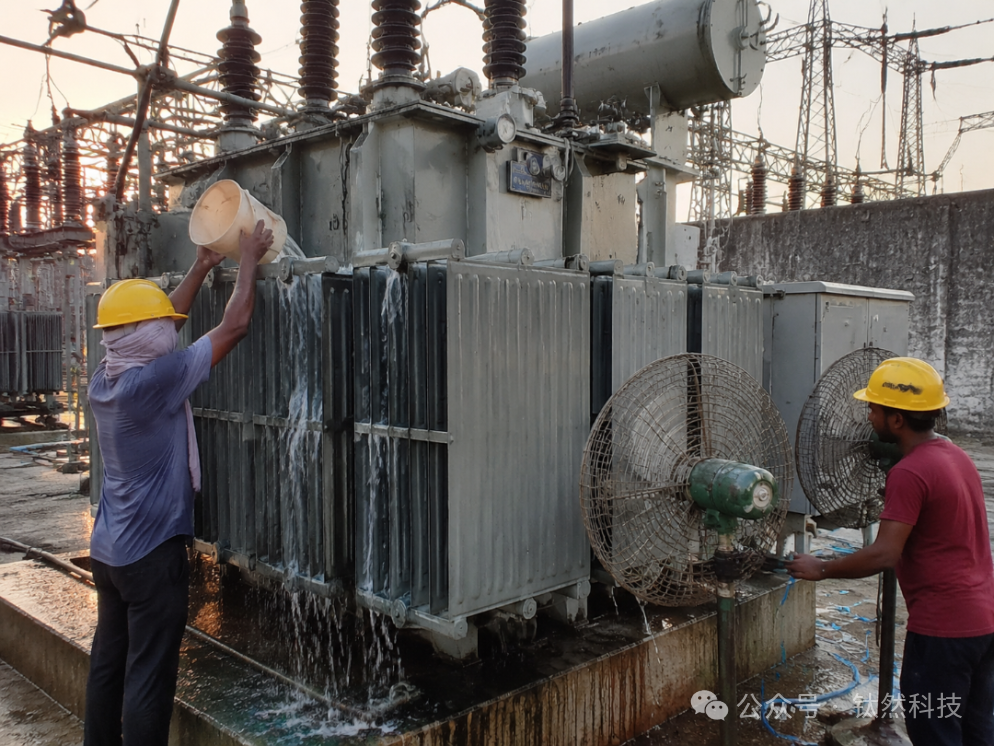
In addition, industries such as grain storage and telecommunications are also deeply mired in the crisis of heat-related damage. Seeking safe, low-consumption thermal control—or even active cooling—industrial solutions has become a major priority in the materials science community in recent years, with radiative cooling being one of the most promising directions. Official data show that both the number of publications and citation frequencies on the topic of "radiative cooling" in top-tier international journals have exhibited rapid growth, indicating that the academic community is continuously innovating and designing various novel cooling materials.
In fact, Tairan Technology has been closely following the forefront of international exploration. By fully leveraging its solid theoretical foundation, strong technical capabilities, and advanced equipment and instruments, the company has already achieved certain results in the innovation, fabrication, and application of radiative cooling materials.
Science time
During the daytime, the sun continuously radiates heat toward the Earth in the 0.25–2.5 μm wavelength band. At the same time, the Earth's surface reflects solar heat and emits its own thermal radiation outward. However, most of this heat is absorbed by the atmosphere and re-radiated back, accumulating over time. Among the heat radiated outward by the Earth's surface, far-infrared radiation in the 8–13 μm wavelength band has the ability to efficiently penetrate the atmosphere and reach the cold depths of outer space—this is known as the "atmospheric window." As a result, this portion of heat can truly escape the Earth. Ultimately, however, the heat outflow remains far lower than the inflow, causing surface temperatures to rise. This is especially pronounced in summer, when the human body becomes unbearable, stored products may spoil, equipment may shut down, and energy consumption continues to climb—leading to various cascading negative effects on daily life and industry.